

Review of Betrayal by Harold Pinter, performed by Marin Theater
/Review by Hannah Yurke.
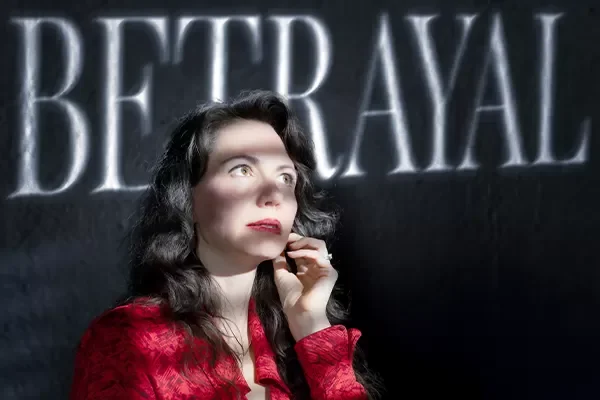
Runs Oct 22, 2026 - Nov 15, 2026
Betrayal lived up to it’s name on multiple levels. London playwright, Harold Pinter, debuted this play in 1978, when I was in the equivalent of 5th grade and growing up in London myself. It’s not the easiest of plays, largely because of it’s story and characters but better understood within it’s historical and semi autobiographical context.
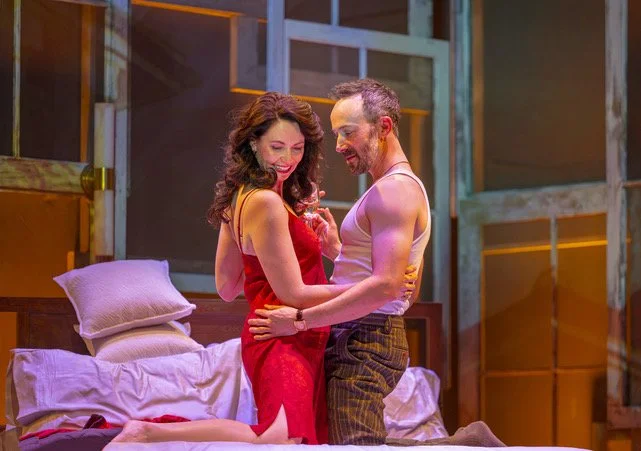
Emma owns a gallery and is married to Robert, a publisher, but is having an affair with his best friend, Jerry, a successful literary agent. Jerry is married to Judith, a doctor we never see. The play begins at the end of Emma and Jerry’s seven year long affair and works backwards in time to 1968 when the affair starts. What unfurls is the story of an illicit relationship between two remorseless, privileged and superficial people who appear to have zero respect for their spouses and no redeeming qualities whatsoever.
Pinter based this play on his own lengthy extra marital affair with TV personality Joan Bakewell (who, incidentally, was a lot more dimensional than the character of Emma. In fact you can still see her presenting the earlier seasons of the dual UK TV series, Portrait and Landscape Artist of the Year on Amazon Prime). Indeed on her first reading of Betrayal, Bakewell regarded it as a diary of their own relationship.
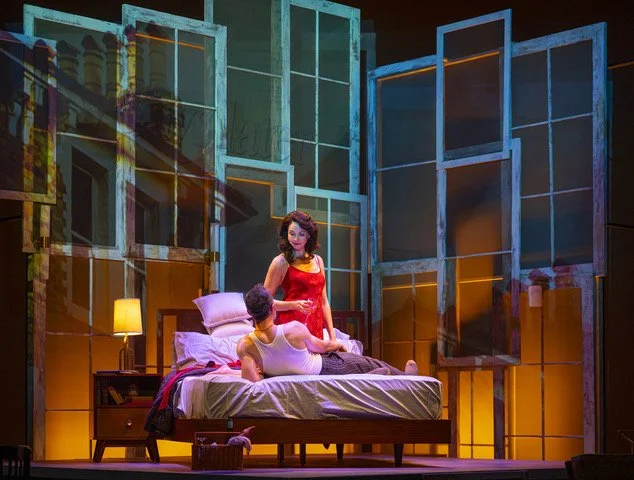
While watching it, I was unaware of it’s semi autobiographical element and my primary questions were, is this just a character study of a trio of deeply unsympathetic people, and what, if anything, lies beneath? If you didn’t know it reflected a version of real life it’s all too easy to miss the possibility of satire and self deprecation or understand it as Pinter’s attempt at self-reckoning. Exactly how self aware and intentional it was is a question of interpretation.
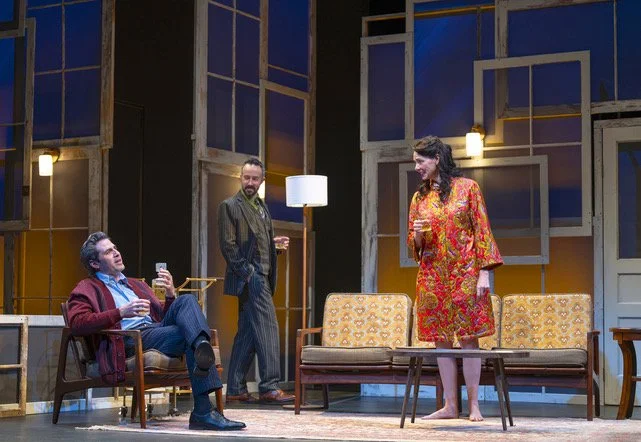
After the 1968 Theatre Act passed in British parliament, censorship in theater was lifted, allowing for more sexually explicit language, scenes and stories in theater productions. 1968 is the year the fictional affair began, though the real one began in 1962. When Betrayal debuted, in 1978, men in particular were still coming to terms with the changes in the division of labor brought about by the women’s movement. As such, Betrayal questions the future and value of marriage in this newly emerging, freshly liberated society with a view to new sexual freedoms too.
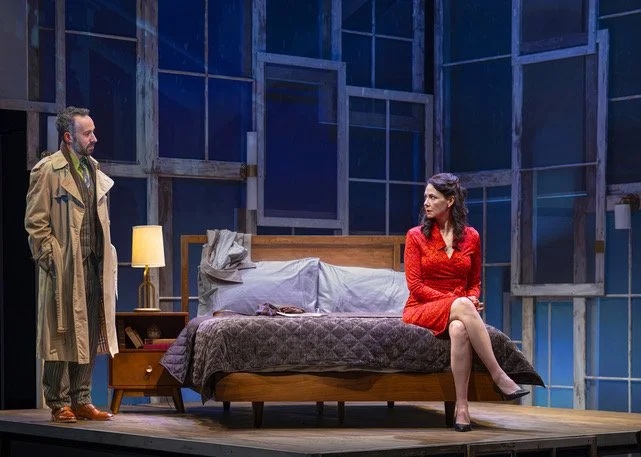
It’s certainly ironic that Emma is never truly liberated. Her husband, Robert, asserts boorish and macho attitudes, bordering at times on the homo erotic so she turns to Jerry instead. Unfortunately, however, Jerry’s overtures, as he initially woos her, exemplify narcissistic love bombing. She remains voluntarily subservient, even going so far as to cook him a stew in the afternoon no less, in anticipation of their rendezvous in the flat rented expressly for their illicit liaisons. All the while Jerry himself wonders aimlessly in the park. While both men are Oxbridge graduates, Emma’s education is never mentioned. She’s shown to read a speculative book and have a single positive opinion on it whereas Jerry in particular and Robert to a lesser extent, talk vainly and endlessly about their writer clients and publishing exploits.
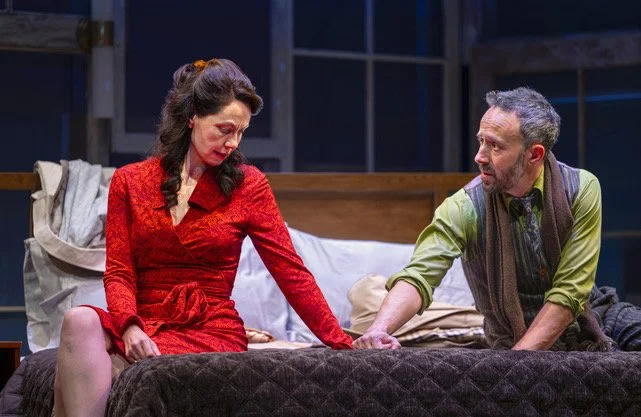
And what about the poor children? Both Emma and Jerry have two young children with their respective spouses. In fact one of the reasons the affair breaks down is because Emma becomes pregnant by the husband she doesn’t love. This inconvenience aside, the children’s almost complete omission, save scant mild expressions of concern, leads me to suspect that Betrayal was written from the perspective of a man who was not fully enlightened.
Pinter’s exploration of the repercussions of women’s newfound freedom could be seen as deeply satirical and sympathetic if he was fully aware of the female perspective, but less intentional if taken from the viewpoint of a man of his time, still restricted by his own patriarchal attitudes. Indeed why wasn’t it a woman who was exploring this new found freedom of ours in play form? Interestingly, Pinter’s real life lover, Joan Bakewell, penned her own riposte to Betrayal upon first reading it, a radio play entitled Keeping in Touch, which uses the character of Rachel to center Joan’s female perspective. It explores the constraints on women in the 1960’s, when the affair first began, in a way that Pinter could never presume to. Fearing further betrayal, Joan kept it to herself for years and it wasn’t broadcast until 2017, yet gives the play a much deeper but lesser known dimension. It’s no secret there was a dearth of female playwrights at this point in history. Pinter may have taken home the Nobel Prize for literature but a look at the history of the prize committee reveals an entrenched history of favoring men for the prize, same old, same old.
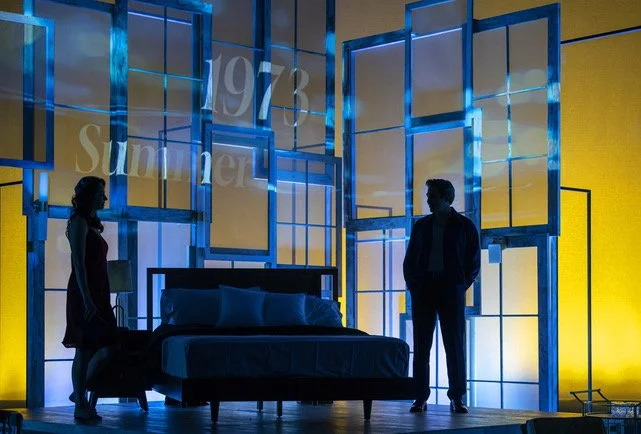
And Betrayal is certainly of it’s time. The portrayal of the Italian waiter sails straight into the still oblivious waters of racist stereotype, but unlike Manuel, the Spanish waiter in Fawlty Towers, which was screened at the same point in time, Betrayal has far less accessible humor to help redeem it.
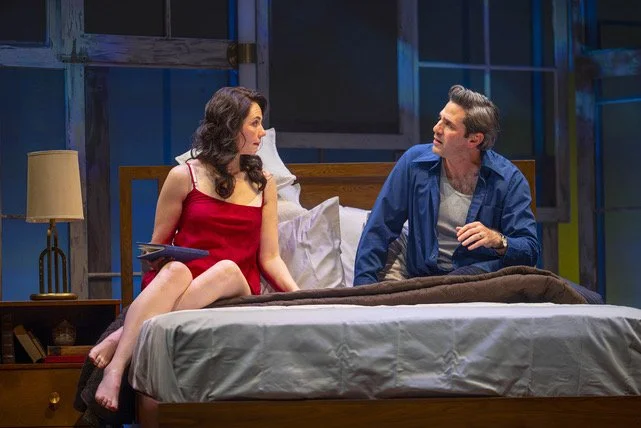
Staging this play was certainly a risk. Mitigating that by assigning it a female director in the form of Carie Perloff, can’t alleviate it’s inherent underlying character faults. Performance wise, to my English ears, the accents were fairly accurately clipped and studied but lacked the cadence and emphasis of colloquial British English, and so didn’t land as well as they might have. I would also have liked to see more chemistry between Jerry, bravely played by Tasso Feldman, and the newly liberated Emma, played by Liz Sklar. Charlie Semine’s stoic portrayal of Robert did the job, but it’s hard to lift characters who have been written as essentially unlikable. Pinter is famous for his subtext but that is as essential to a story as plot and structure, and I searched for it but couldn’t find enough.
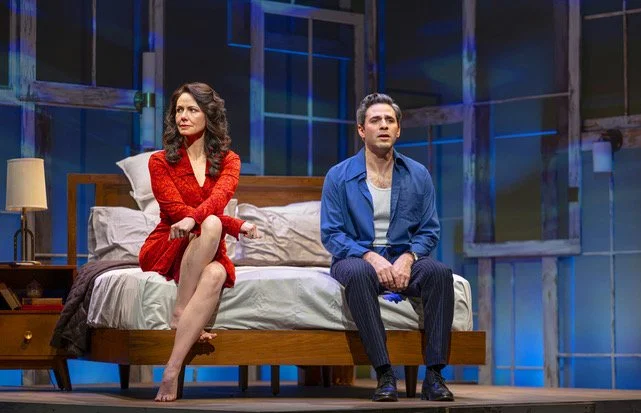
However you interpret Betrayal, the characters remain contemptible because Pinter gave us no underlying reason to care for them. There are almost zero mitigating circumstances. The exclusion of women and social expectations of an early marriage Joan cited as a reason to cheat were barely touched upon. There was no clear justification, no jeopardy, no redemption, no dilemma, no big reveal. At face value it’s simply the story of a sordid love triangle between three privileged, superficial people who possess absolutely no redeeming personality features like a sense of humour or sense of valor, misplaced or otherwise.
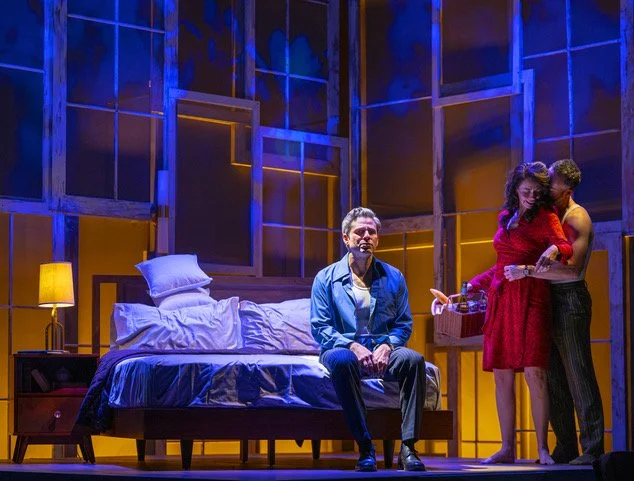
My take is that Betrayal is at best a half baked attempt at self-reckoning that can all too easily be interpreted as deeply self absorbed. It presents as a textbook example of how to create irredeemably unsympathetic characters, and as such alas, it is not my favorite of plays.